

You step on a rusty nail or cut yourself on something sharp and suddenly hear the familiar advice: get a tetanus shot. You agree because tetanus, also called lockjaw, poses a real danger, yet you hesitate when you think about possible reactions. Do most people sail through with just a sore arm, or do tetanus shot side effects sometimes cause bigger problems? This review breaks down the facts so you know exactly what to expect and when to reach out for help.
Why Doctors Recommend the Tetanus Shot
You stay protected when you keep your tetanus vaccination up to date. The bacteria that causes tetanus lives in soil, dust, and animal waste, and it enters the body through breaks in the skin. Once inside, it produces a powerful toxin that locks muscles and can stop breathing. Modern vaccines combine tetanus protection with diphtheria and often pertussis in the Tdap version. Adults usually need a booster every ten years or after certain wounds. You feel safer knowing one quick shot prevents a disease that still kills people in areas with low vaccination rates. The protection works so well that serious tetanus cases remain rare in vaccinated populations.
Common Tetanus Shot Side Effects You Can Expect
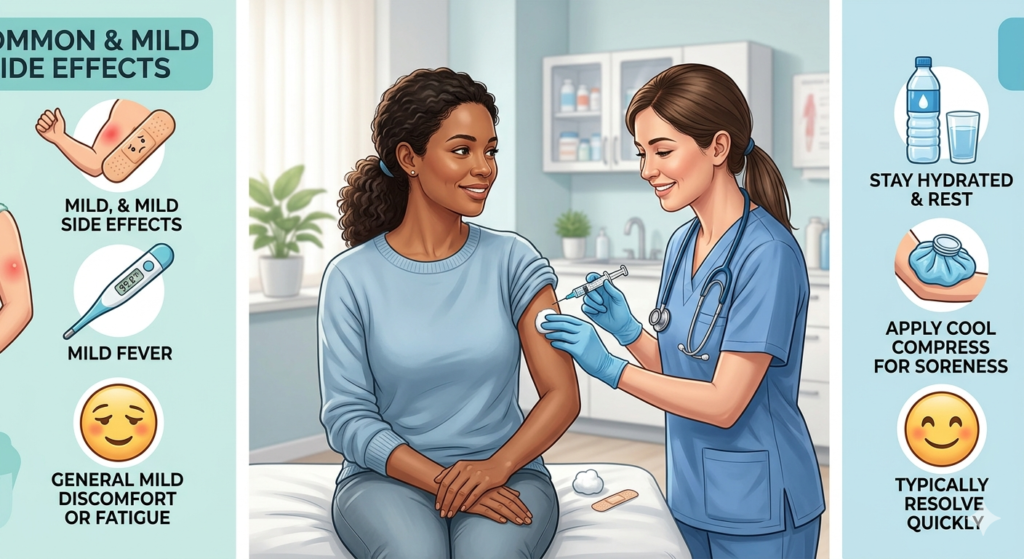
You roll up your sleeve and feel the needle for just a second. Most people notice mild reactions at the injection site within the first day or two. Your arm often feels sore, tender, or achy exactly where the nurse gave the shot. Redness and slight swelling appear around the area and usually fade within three to four days. You might also develop a low-grade fever, mild headache, or general tiredness that makes you want to rest. Some adults report nausea, mild stomach upset, or loss of appetite for a short time. Children sometimes become fussy or irritable after their DTaP doses. These tetanus shot side effects feel annoying but stay manageable with rest, hydration, and over-the-counter pain relief when needed.

How Long Side Effects Normally Last
You wake up the morning after your shot and notice the soreness peaks around 24 to 48 hours later. Most common reactions disappear within two to three days. The injection site tenderness might linger up to a week in some cases, but it gradually improves each day. Fever and fatigue usually clear even faster. You return to normal activities without issue once the initial discomfort passes. The temporary nature of these effects explains why millions of people receive boosters every year without long-term disruption. You plan your shot on a day when you can take it easy if needed, and you feel prepared rather than surprised.
Rare but Serious Reactions to Watch For
You stay alert for unusual signs even though severe problems occur infrequently. A small number of people develop a large, painful swelling that spreads beyond the injection site. Allergic reactions can appear within minutes to hours and include hives, swelling of the face or throat, or difficulty breathing. Very rarely, high fever above 105°F, seizures, or nonstop crying in young children signal a stronger response. Shoulder injury related to vaccine administration (SIRVA) happens if the needle placement affects the joint, leading to longer-lasting pain and limited motion. You contact a doctor right away if symptoms feel severe or worsen instead of improving. Quick action keeps rare issues from becoming bigger concerns.
Who Experiences Stronger Side Effects
You notice patterns when you look at different age groups and health situations. Adults receiving their Tdap booster often report more noticeable arm soreness than children do with routine shots. People who receive frequent boosters sometimes feel stronger local reactions. Those with a history of severe allergies or previous vaccine reactions face higher chances of complications, so they discuss options with their doctor first. Pregnant women receive the Tdap vaccine safely during each pregnancy, and studies show no unusual risks for mother or baby. Overall, healthy individuals tolerate the shot well, and the benefits far outweigh the temporary discomfort for almost everyone.
Tips to Reduce Discomfort After Your Shot
You ease the experience with simple steps that work for most people. You apply a cool compress to the injection site for 10 to 15 minutes at a time to reduce swelling and soreness. You move your arm gently throughout the day instead of keeping it still, which prevents stiffness. You stay hydrated and rest when fatigue hits. Over-the-counter medicines like acetaminophen or ibuprofen help with pain and fever when used as directed. You avoid heavy lifting with the injected arm for the first day or two. These easy habits turn potential annoyance into a minor blip that barely affects your routine.
The Risk of Tetanus Compared to Vaccine Reactions
You weigh the real dangers when you consider skipping a booster. Untreated tetanus carries a high death rate even with modern hospital care. The disease causes painful muscle spasms, breathing problems, and long recovery times for survivors. In contrast, tetanus shot side effects stay mild for the vast majority of recipients. Serious vaccine reactions occur so rarely that health authorities continue to recommend regular boosters without hesitation. You protect yourself and those around you when you stay current, especially if you work outdoors, garden, or travel to areas with lower vaccination coverage. The math feels clear once you compare the tiny risk of side effects against the very real threat of the disease.
When to Call Your Doctor After a Tetanus Shot
You trust your instincts if something feels off. You reach out to your healthcare provider if arm swelling grows larger after 48 hours, if fever climbs above 102°F, or if you develop severe headache or vomiting. You seek emergency care for signs of allergic reaction such as trouble breathing, rapid heartbeat, or dizziness. You also check in if shoulder pain and weakness continue beyond a few days. Most people never need these calls, but knowing the signals gives you confidence and peace of mind.
Final Verdict on Tetanus Shot Side Effects
Tetanus shot side effects turn out to be mostly mild and short-lived for the great majority of people. You deal with a sore arm, possible low fever, or brief tiredness, yet you gain powerful protection against a dangerous disease. Serious reactions remain rare, and healthcare providers know how to handle them when they occur. You keep your vaccinations current because the small inconvenience beats the alternative by a huge margin. Next time you need a booster, you schedule it confidently, follow simple aftercare tips, and move on with your day knowing you made a smart choice for your health. The tetanus shot continues to rank among the safest and most effective tools in modern medicine, giving you one less thing to worry about when life throws sharp surprises your way. Stay protected, listen to your body, and enjoy the freedom that comes with smart prevention.
[…] want alternatives to mainstream coverage. You gain access to unique stories, diverse opinions, and fast-breaking citizen reports when you visit the site. At the same time, you must read carefully because […]