
You want clothes that hug your body just right, move with you, and last through many adventures. Knowing how to measure torso length unlocks that perfect fit and helps you shop smarter, whether you hunt for swimsuits, dresses, jackets, or backpacks. This skill empowers you to avoid guesswork and enjoy garments that feel custom-made.
Why Torso Length Matters
You stand in front of the mirror and notice how some tops ride up while others bunch at the waist. Your torso length explains those frustrations. People with long torsos often find standard sizes too short in the midsection, while those with shorter torsos deal with excess fabric that hides their shape. This measurement reveals your unique body proportions and guides better choices.
You gain confidence when outfits flatter your frame. A well-fitted top boosts posture and comfort. You reduce returns and waste, which supports eco-friendly living by keeping quality pieces in your wardrobe longer instead of discarding ill-fitting ones. Manufacturers use torso data to create inclusive sizing, so your efforts contribute to smarter fashion overall.
Tools You Need for Accurate Results
You grab a flexible cloth measuring tape—the kind tailors use. Avoid stiff metal tapes because they refuse to follow your spine’s natural curve. Stand in front of a full-length mirror for solo checks. enlist a friend for even better precision. Wear light clothing or measure directly against skin for true readings. Keep a notebook handy to record numbers and compare later.
Step-by-Step: How to Measure Torso Length
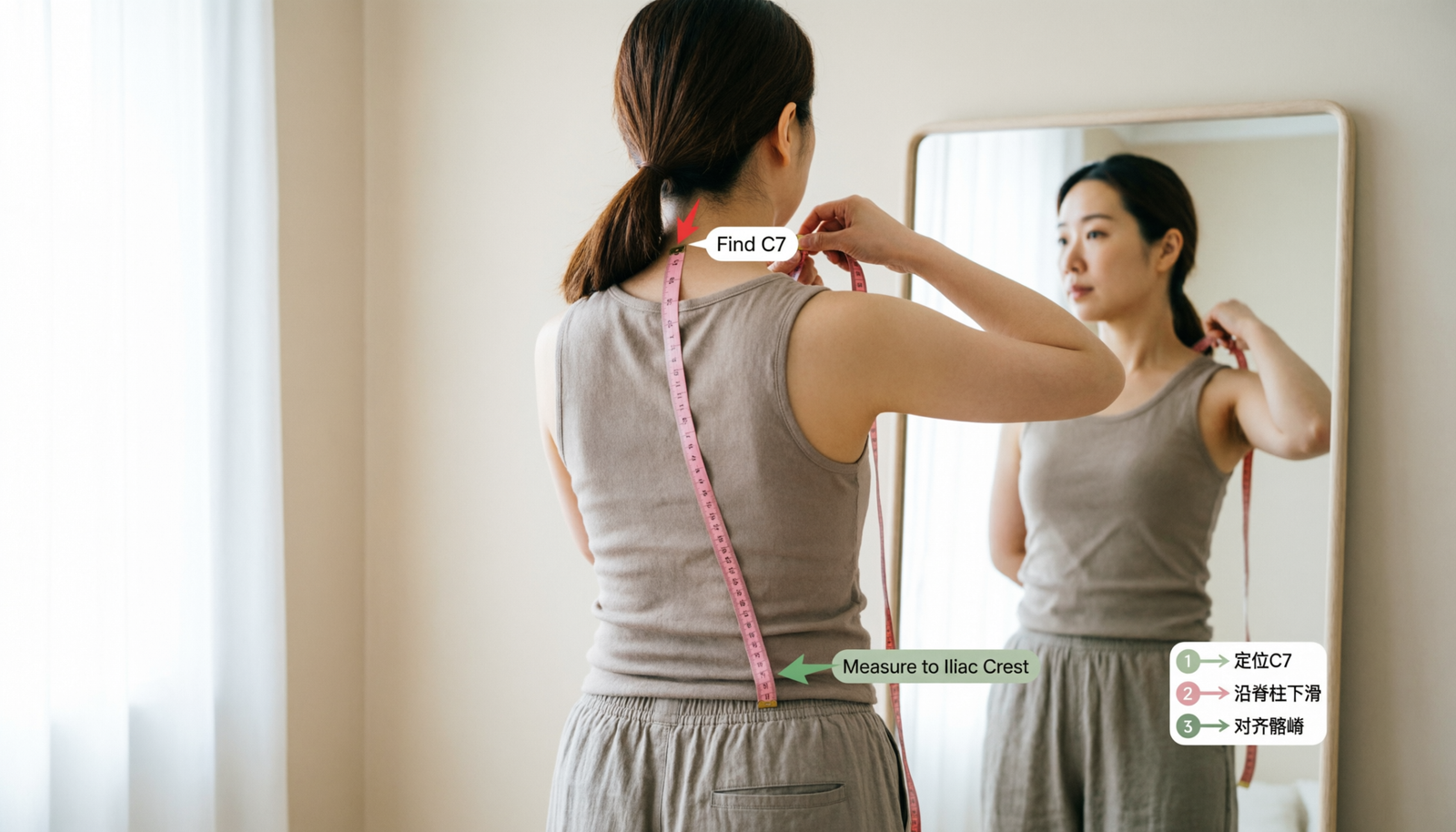
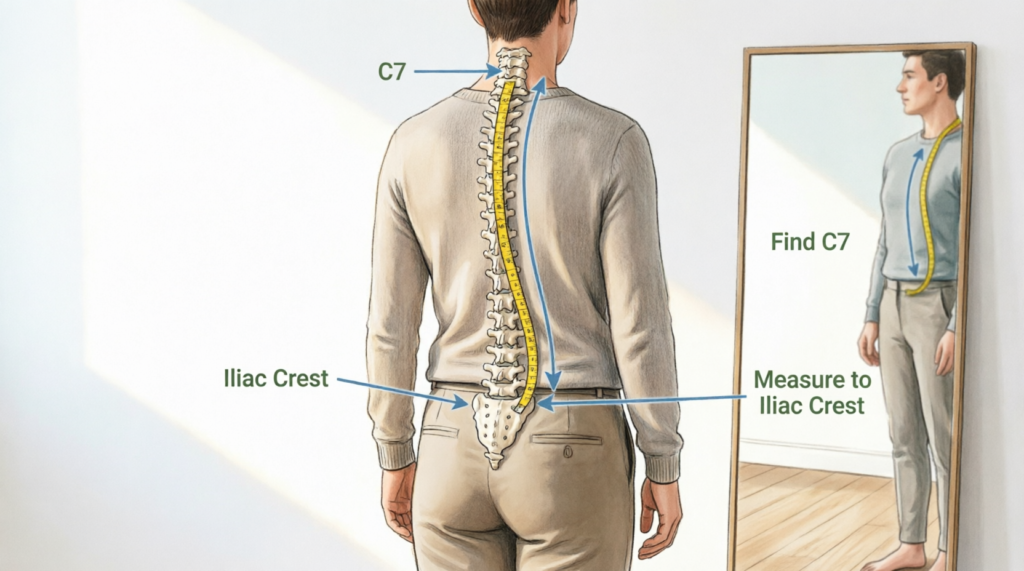
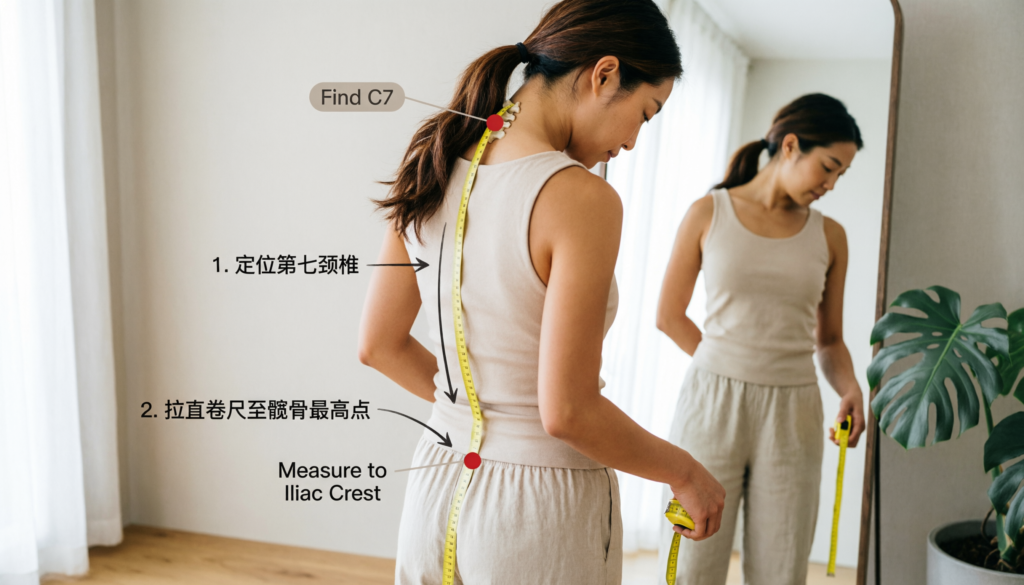
You begin by finding the C7 vertebra. Tilt your head forward gently. Feel the prominent bony bump at the base of your neck where it meets your shoulders. That landmark starts every reliable torso measurement.
Next, you locate your iliac crest. Place both hands on your hips with thumbs pointing backward. Slide your thumbs upward until they rest on the top edges of your hip bones. Draw an imaginary horizontal line across your back between those points. The midpoint along your spine marks the end.
You position the tape at your C7. Let it drape naturally down the center of your back while following the spine’s gentle curve. Do not pull it straight or tight. Reach behind or ask your helper to guide the tape to the iliac crest level. Hold it steady and read the number where it crosses that line. Repeat the process two or three times to confirm consistency. Most adults measure between 15 and 22 inches, but your result depends on your unique build.
You stay relaxed throughout. Tension distorts results, so breathe normally and stand tall without arching. Measure at the same time of day for consistency, as posture and minor swelling affect readings slightly.
Different Ways to Measure for Specific Needs
You adjust your approach based on the garment. For backpacks, you follow the spine exactly as described so the hip belt sits comfortably on your iliac crest and transfers weight properly. For swimsuits or bodysuits, you run the tape from one shoulder, down the front through the crotch, and up the back to the same shoulder. This full loop gives the torso circumference that designers use for one-piece fits.
For dresses and tops, you sometimes measure from the shoulder seam down to your natural waist. You experiment with these variations and note how they influence how clothes drape. Each method reveals another layer of your proportions and helps you communicate clearly with tailors or online retailers.
Understanding Your Torso Type
You compare your torso length to your overall height. Subtract your leg length (crotch to floor) from total height to estimate torso contribution. If your upper body dominates, you rock a long torso. Shorter torsos create longer-looking legs. You use the two-hand test below your bust: if you fit more than two hands between bust and waist, you likely have a longer torso.
You celebrate whatever your measurement shows. Body diversity makes fashion exciting. Long torsos pair beautifully with high-waisted bottoms that create balance. Shorter torsos shine in mid-rise styles and layered tops that add visual length. You mix and match until you discover combinations that make you feel unstoppable.
Common Mistakes and How to Avoid Them
You skip bulky clothing because sweaters and jackets add false inches. You keep the tape flat against your back without twisting. You avoid sucking in your stomach or forcing unnatural posture. You double-check landmarks every time because a misplaced C7 or iliac crest throws off the entire measurement. You write down exact figures and dates so you track changes over time from fitness, aging, or lifestyle shifts.
Applying Your Measurement to Real Life
You shop online with newfound precision. You look for brands that list torso-specific sizing or offer petite, regular, and tall options within sizes. You tell tailors your exact torso length for alterations that transform off-the-rack pieces into wardrobe heroes. You choose sustainable fabrics that fit perfectly from day one, reducing the need for frequent replacements and supporting ethical production.
You build a capsule wardrobe where every item coordinates effortlessly. You feel the difference when a jacket’s hem lands exactly where it should or when a dress waist hits your natural curve. These small wins accumulate into daily confidence and joy in getting dressed.
Benefits Beyond Fashion
You improve posture awareness through regular measuring. You notice how strong core muscles influence torso length perception and overall alignment. You share this knowledge with friends and family, turning measuring sessions into fun bonding activities. You contribute to a culture that values accurate sizing over one-size-fits-most assumptions, pushing the industry toward more inclusive and eco-conscious practices.
You explore activities like hiking or cycling with properly fitted gear that prevents strain. Backpacks that match your torso length distribute weight evenly and keep you comfortable on long trails. Swimwear that respects your proportions lets you move freely in the water without constant adjustments.
Refining Your Technique Over Time
You practice until the process takes just a minute. You photograph your landmarks (with privacy in mind) or mark them lightly with washable tape for quick future checks. You compare measurements across seasons and note how strength training or yoga subtly changes your posture and apparent length. You stay curious and treat each session as a conversation with your body.
You experiment with string and ruler if you lack a tape, then transfer the length for an accurate reading. You involve children or partners in learning the skill, creating household knowledge that saves time and money for everyone.
Final Thoughts on Mastering How to Measure Torso Length
You now hold the key to clothing that celebrates your shape instead of fighting it. Take that flexible tape, find your landmarks, and discover the number that transforms your wardrobe. You shop with intention, dress with confidence, and reduce waste through smarter choices. Your body thanks you with comfort that lasts all day. Start measuring today and watch how the right fit elevates everything you wear.