
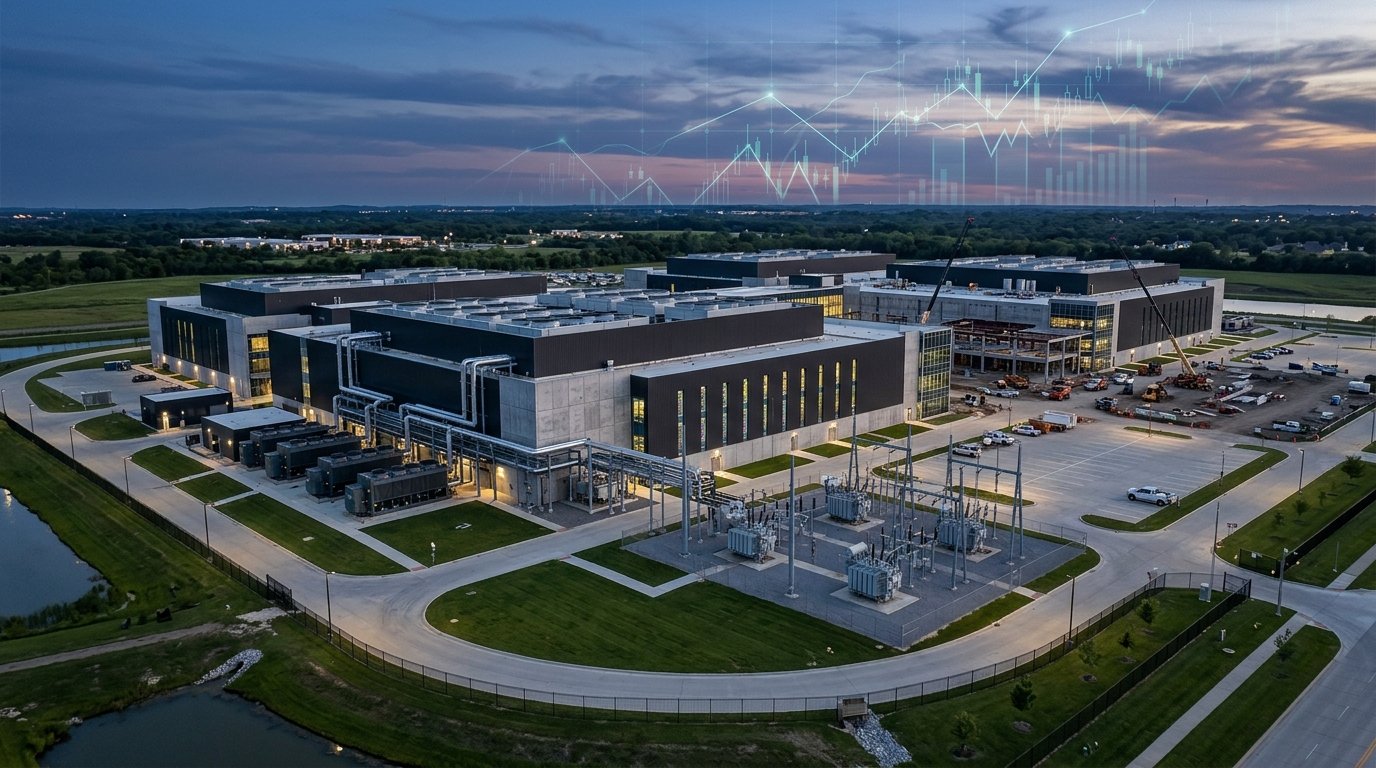
Applied Digital has become one of the more closely watched names in the AI infrastructure market. The company is building large-scale data centers designed for artificial intelligence and high-performance computing, while signing long-term agreements with major hyperscaler customers. That combination has pushed investor expectations much higher, but it has also created a difficult valuation question: how much of the future growth is already reflected in the stock?
The latest APLD stock forecast points to substantial potential upside according to several Wall Street analysts. At the same time, the estimates are unusually wide, showing that investors are still debating how quickly Applied Digital can convert its contracted capacity into sustainable earnings.
Applied Digital closed at $27.21 on August 21, 2026, according to recent market data. Its shares have been highly volatile, with the stock moving sharply after major lease announcements and earnings updates.
What Is Applied Digital?
Applied Digital Corporation develops and operates high-performance data center infrastructure for AI, networking, blockchain, and other computing workloads. Its business has increasingly shifted toward purpose-built AI data centers, where access to power, cooling infrastructure, and long-term customers can be more important than traditional server hosting metrics.
The strategic change is significant because the company is moving toward infrastructure designed for very large AI deployments. Instead of depending primarily on short-term computing demand, Applied Digital is pursuing long-duration leases with major customers.
That strategy has produced an unusually large contracted revenue pipeline compared with the company’s historical revenue base.
As of May 31, 2026, Applied Digital had approximately 1.4 gigawatts of contracted critical IT load across five AI Factory campuses, representing around $36 billion of contracted revenue over the initial lease terms. If renewal options are exercised, the potential value rises to approximately $86 billion.
The Latest APLD Stock Forecast
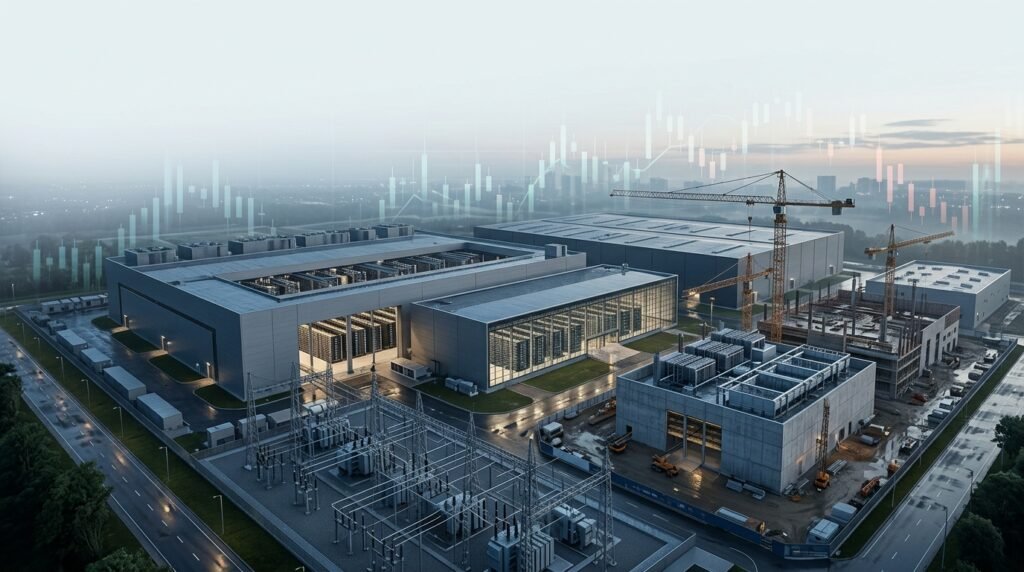
Analyst expectations remain strongly bullish overall, although the range between individual targets is enormous.
Investing.com currently reports a consensus based on 11 analysts of 10 Buy ratings and one Hold rating, with no Sell ratings. Its average 12-month price target is approximately $74.23, while the low estimate is $37.50 and the high is $109.
StockAnalysis, using S&P Global analyst data, shows the same $74.23 average target. From the recent share price around $27, that implies theoretical upside of more than 170%. The median target is listed at $79.
Recent analyst actions illustrate just how divided the valuation debate can be. Northland Securities has an $82 target and a Buy rating, Needham maintains an $83 target, and B. Riley raised its target to $75. Morgan Stanley is considerably more cautious, maintaining an Equal-Weight rating and a $37.50 target.
MarketBeat gives a broader view using 17 analyst ratings and classifies the consensus as Moderate Buy. Its data includes 14 Buy ratings, two Holds, and one Sell.
The difference between the various consensus figures matters. Analyst databases do not always include the same number of analysts or use exactly the same time window. Investors should therefore view the average target as a snapshot of expectations rather than a guaranteed destination for the stock.
Why Analysts See So Much Upside
The biggest reason behind the optimistic APLD outlook is the rapid growth in contracted AI infrastructure.
In June 2026, Applied Digital announced a 15-year, take-or-pay lease covering 210 megawatts at Delta Forge 2. The agreement represents approximately $5.2 billion of base-term contracted revenue and as much as $12.7 billion if all renewal options are exercised over the full 30-year period.
That transaction brought Applied Digital’s contracted portfolio to about $36 billion across five campuses. The company also said about 70% of its contracted revenue was backed by U.S.-based investment-grade hyperscalers.
This is important because long-term take-or-pay agreements provide greater revenue visibility than speculative capacity that still needs to find customers.
Applied Digital has also demonstrated that it can bring capacity online. The first 100 MW building at Polaris Forge 1 became operational in October 2025. On June 30, 2026, the company delivered another 75 MW, taking live capacity at that campus to 175 MW. The completed campus is ultimately contracted for 400 MW of critical IT load.
For bullish analysts, successful execution is the bridge between Applied Digital’s massive contracted backlog and future cash generation.
Applied Digital’s Financial Performance
The company entered this new phase with rapidly rising revenue, but profitability remains a major issue.
For fiscal 2026, Applied Digital reported revenue of $611.3 million, up 167% from the prior year. Fourth-quarter revenue reached $258.7 million, an increase of 407% year over year.
Adjusted profitability also improved substantially. Fiscal 2026 adjusted EBITDA reached $107.2 million compared with $19.6 million in fiscal 2025. Adjusted net income from continuing operations was $36.1 million, compared with an adjusted net loss of $12.5 million the previous year.
However, the GAAP picture was much less attractive. Applied Digital reported a fiscal 2026 net loss attributable to common stockholders of $249.2 million. At May 31, 2026, the company reported approximately $4.2 billion in cash, cash equivalents, and restricted cash against $5.0 billion of debt.
That contrast is central to the APLD investment story. The company is growing rapidly and improving adjusted operating metrics, but it is also spending enormous amounts of capital to build infrastructure that will generate revenue over many years.
What Analyst Forecasts Expect for Revenue
Consensus estimates suggest that the financial transformation could continue.
StockAnalysis currently shows an estimated fiscal 2027 revenue figure of about $837.7 million, followed by approximately $1.90 billion for the following fiscal year. The same estimates show adjusted expectations remaining pressured at the earnings-per-share level in the near term, with estimated EPS of negative $0.95 for the current fiscal year and negative $0.25 for the next one.
That forecast helps explain why analysts can remain bullish even while GAAP earnings are negative.
The market is increasingly valuing Applied Digital based on future contracted infrastructure, future operating capacity, and expected earnings growth rather than simply looking at trailing profits.
Still, that approach has a weakness. The more an investment thesis depends on future facilities and future cash flows, the more sensitive the valuation becomes to construction delays, financing costs, customer concentration, and changes in AI infrastructure demand.
APLD Forecast for the Next 12 Months
The 12-month outlook is best viewed as a range rather than a single number.
At the cautious end of the current analyst spectrum, Morgan Stanley’s $37.50 target suggests meaningful upside from recent levels but does not assume that Applied Digital will immediately receive the highest valuations assigned by more bullish firms.
At the middle of the range, targets around $60 to $83 reflect the idea that the company’s contracted AI infrastructure can support much stronger revenue and operating profits as more facilities become operational. Citizens has a $60 target, B. Riley has $75, Northland has $82, and Needham has $83.
The $109 high estimate represents a much more aggressive outcome. Reaching such a level would likely require investors to place a high value on Applied Digital’s long-term AI data center pipeline, successful execution, strong customer relationships, and improving profitability.
This is why the average price target should not be interpreted as the most likely exact price. The dispersion itself is useful information.
What Could Push APLD Stock Higher?
Several factors could support a bullish scenario.
The first is continued execution. Every major campus that reaches operation on schedule provides evidence that Applied Digital can turn contracted projects into producing assets.
The second is additional leasing activity. The company’s recent agreements at Delta Forge 1, Polaris Forge 3, and Delta Forge 2 added roughly $20 billion of base-term contracted revenue from the same high-investment-grade hyperscaler.
The third factor is the broader AI infrastructure cycle. Hyperscalers continue to require enormous amounts of computing capacity, and that creates demand for specialized facilities capable of supporting high-density AI workloads. Reuters reported that Applied Digital’s June Delta Forge 2 deal was part of a broader increase in data center spending driven by AI demand.
Finally, profitability could become a major catalyst if Applied Digital begins translating its growing operational footprint into stronger recurring margins and cash generation.
What Could Hurt the APLD Forecast?
The risks are just as important as the bullish arguments.
The most obvious issue is financing. Data centers require enormous upfront investment, and Applied Digital has already accumulated billions of dollars of debt while continuing to fund construction. Its balance sheet shows the scale of that commitment.
Interest rates and financing conditions therefore matter greatly. Higher borrowing costs can reduce the economic value of future projects and place additional pressure on cash flow.
Execution risk is another concern. A contracted lease is valuable, but the company still has to complete the buildings, secure power, deliver the required technical infrastructure, and bring projects online. Delays can shift revenue recognition and increase costs.
Customer concentration also deserves attention. Three major leases announced around mid-2026 were with the same high-investment-grade hyperscaler, and those agreements represented about $20 billion in combined base-term contracted revenue.
That relationship is a strength because the customer is financially strong and repeatedly choosing Applied Digital. However, it also means that a large portion of the growth story depends on a relatively concentrated group of counterparties.
There is also valuation risk. A stock can fall even when the company continues to grow if investors decide that future growth has already been priced into the shares.
APLD Stock Forecast: Bull, Base, and Bear Scenario
A useful way to think about the forecast is through scenarios rather than a single prediction.
In a bullish scenario, Applied Digital delivers its projects on schedule, signs additional long-term AI leases, expands recurring revenue, improves margins, and gains investor confidence in its ability to generate substantial cash flow. In that environment, the higher analyst targets could become increasingly defensible.
In a base-case scenario, the company continues to grow quickly but remains capital intensive. Some of the contracted portfolio becomes operational while investors remain cautious about debt, dilution, and valuation. The share price could still appreciate, but it may trade well below the most optimistic targets for long periods.
In a bearish scenario, construction delays, cost overruns, weaker AI infrastructure demand, financing difficulties, customer concentration, or a broad technology-sector valuation reset could push the stock considerably lower. In that case, even a large contracted backlog might not protect the equity from a major correction.
Is APLD Stock a Buy?
The current analyst evidence leans bullish, but that does not make Applied Digital a low-risk stock.
The strongest argument for APLD is the scale of its contracted AI infrastructure pipeline. The company has moved from being a relatively small digital infrastructure business toward becoming a developer and operator of multibillion-dollar AI campuses, with approximately $36 billion in initial contracted lease revenue across five campuses as of mid-2026.
The strongest argument against the stock is that investors still have to wait for a substantial portion of that future value to be converted into operating assets and cash flow. Debt, capital requirements, execution risk, customer concentration, and valuation can all affect the outcome.
For investors researching the APLD stock forecast, the key question is therefore not simply whether AI demand will grow. The more important question is whether Applied Digital can finance and execute its enormous development pipeline while generating attractive returns for shareholders.
Frequently Asked Questions
What is the current APLD stock forecast?
Current analyst data is broadly positive. Investing.com and StockAnalysis show an average 12-month price target of about $74.23 based on 11 analysts, although individual estimates range from $37.50 to $109.
What is the highest APLD price target?
The highest target currently shown by Investing.com and StockAnalysis is $109.
What is the lowest analyst target for APLD?
The lowest current target in those 11-analyst datasets is $37.50, from Morgan Stanley.
Why is Applied Digital stock associated with AI?
Applied Digital is developing purpose-built high-performance data centers for artificial intelligence and other accelerated-computing workloads. Its recent growth strategy has centered on large AI Factory campuses and long-term hyperscaler leases.
Does Applied Digital make a profit?
The company reported positive adjusted net income of $36.1 million for fiscal 2026, but it still reported a GAAP net loss attributable to common stockholders of $249.2 million for the year.
What is the biggest risk to APLD?
One of the largest risks is the enormous amount of capital required to build the company’s AI data center portfolio. Debt, financing costs, construction execution, customer concentration, and changing AI infrastructure valuations are all important risks to monitor.
Final Outlook for APLD
The current APLD stock forecast is optimistic on Wall Street, but the unusually wide range of targets tells investors something important: Applied Digital is still a high-expectation, high-volatility growth story.
The company has made substantial progress. Revenue surged in fiscal 2026, adjusted EBITDA improved sharply, new hyperscaler leases expanded the contracted portfolio, and additional AI capacity is moving toward operation.
At the same time, the investment case remains dependent on execution. The market is assigning value today to infrastructure and earnings that will develop over several years.
That makes APLD particularly sensitive to construction progress, financing conditions, customer commitments, AI demand, and the overall valuation of AI infrastructure companies. Investors considering the shares should treat analyst targets as forecasts, not promises, and focus closely on quarterly cash flow, debt, new lease announcements, project delivery milestones, and recurring operating revenue.