
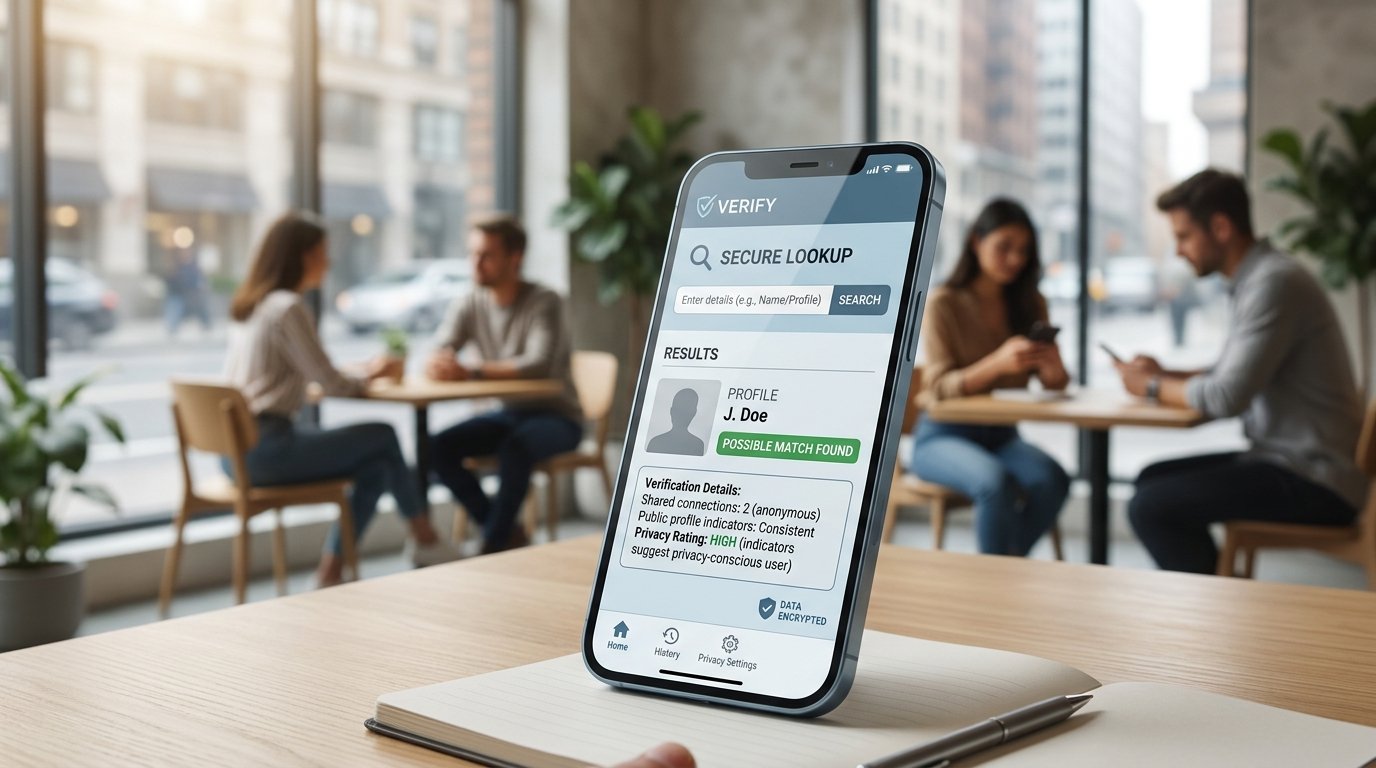
Searching for a tea checker app can be confusing because the phrase does not point to one single product. As of August 2026, several apps and websites use names such as Tea Checker, Tea App Checker, and TeaChecker, while the original Tea Dating Advice app is a separate product. Some services offer one-time lookups, while others advertise subscriptions or search credits. That difference matters before entering personal information or paying for a report.
The basic reason people search for a Tea checker is straightforward. They want to know whether information about them appears on Tea, a dating-safety and advice platform where verified women can share dating experiences and discuss potential matches. Tea’s current Google Play listing says users can access an anonymous community, search for people, receive alerts, and review information intended to help them identify dating red flags.
A checker attempts to solve the information gap created by that model. Instead of asking someone else to search Tea for you, a third-party service may let you submit identifying information and receive a match or report. However, the quality, pricing, privacy practices, and search method can differ considerably from one service to another.
What Is a Tea Checker App?
A Tea checker app is generally a third-party lookup tool designed to determine whether a person’s name, phone number, photo, social handle, or other identifying information may be associated with content on the Tea app.
There is an important distinction here: Tea Checker is not the same thing as Tea Dating Advice. Tea Dating Advice is the dating-safety platform itself, while third-party checker products attempt to search or report information associated with Tea. Tea’s official terms identify Tea Dating Advice, Inc. as the company behind its app and website.
Several third-party products currently exist. One Google Play listing called TeaChecker, package io.teachecker.teachecker, describes itself as a search service offering real-time Tea data, focused searches by name or phone, location filters, and access to comments and red- or green-flag information. It also explicitly says it is independent and is not affiliated with or endorsed by Tea Dating Advice.
Another Google Play listing, com.teachecker.app, uses the same basic Tea Checker name but describes a different workflow based on a one-time payment and a result such as Found, Not Found, or Possible Match within 24 hours.
That is why simply searching for “Tea Checker” is not enough. You need to identify exactly which domain and app you are dealing with.
How Does a Tea Checker Work?
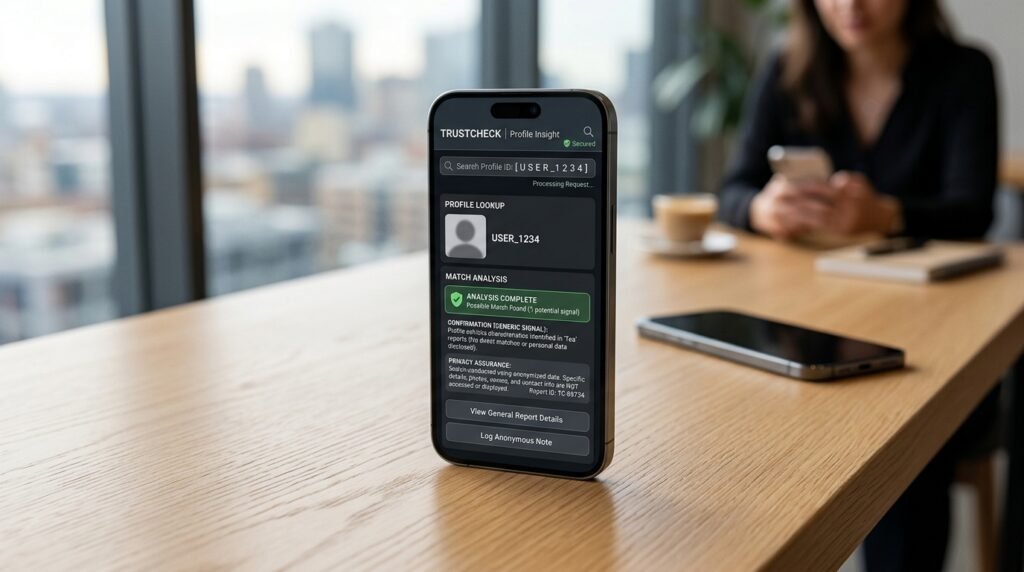
The process depends on the service, but the basic idea is usually similar.
A checker asks for enough information to distinguish one person from other people with similar names. Depending on the service, that may include a first name, phone number, city, age, social media handle, or photo.
The io.teachecker.teachecker listing says users can search by name or phone and refine the search using location, distance, and optional age range. It describes the results as live Tea data rather than a static directory.
The website at TeaChecker.com takes a different approach. It says each lookup is manually performed by a person who cross-references information such as a name, Instagram handle, photo, city, or phone number against Tea profiles. It says results may be categorized as Found, No Record, or Uncertain and are normally emailed within 24 hours.
This difference between automated searching and manual checking is important. A system that searches indexed information instantly may be faster, while a manual lookup may place more emphasis on matching context. Neither approach should automatically be assumed to be perfectly accurate.
Why Are People Using It?
The most common reason is uncertainty.
A person may hear from a friend that they were mentioned on Tea, see a screenshot without context, or notice changes in dating interactions and wonder whether an existing post is involved. A checker is marketed as a way to replace that uncertainty with a direct answer.
The appeal is especially strong because Tea’s own product is designed primarily as a women-focused dating-safety community. Its current Google Play listing says women can use the platform to ask about potential dates, identify red flags, and review dating experiences shared by other verified women.
Third-party checkers target the other side of that information gap. They promise a way to determine whether a person’s identity appears in the available Tea content.
That does not mean every match is necessarily meaningful. Names can overlap, photographs can resemble one another, and information can become outdated. The most useful result is therefore not simply a “yes” or “no,” but a result that provides enough context to judge whether the match actually belongs to the right person.
Tea Checker App Features to Look For
The exact feature set varies by product, but several features are especially useful when comparing services.
A good checker should explain what identifiers it accepts. Name-only searches are more vulnerable to false matches than searches that combine a name with a city, phone number, age range, or image.
Context is another major factor. The io.teachecker.teachecker Google Play listing says users can open matching results and review comments along with red- and green-flag information.
Some services also advertise screenshots or supporting evidence. TeaChecker.com says its reports may include screenshots when available and can label uncertain matches rather than presenting every possible result as confirmed.
Turnaround time matters as well. One service says results are delivered in the same session, while another says its lookup can take up to 24 hours.
Finally, check the payment model. The current io.teachecker.teachecker listing describes weekly, monthly, and yearly plans that renew automatically unless canceled through Google Play. Meanwhile, the com.teachecker.app listing describes itself as a one-time payment service.
These are materially different products even though their names look almost identical.
Is the Tea Checker App Legit?
The safest answer is that legitimacy depends on the specific service you are using.
The current search results show multiple Tea-checking businesses and apps, and some developers themselves warn users about similarly named websites. For example, the developer response on the com.teachecker.app Google Play page says its service does not operate on a subscription model and argues that some users complaining about recurring payments may have used a different similarly named website.
At the same time, the Google Play listing for that app currently has a low rating and contains multiple user complaints involving alleged recurring or unexpected charges. Those complaints are user reports, not independent proof that the developer committed fraud, and the developer disputes the attribution of some of them.
That conflict is exactly why consumers should verify the domain, developer name, billing terms, and support contact before paying.
TeaChecker.com presents itself as a separate service and states that it operates exclusively at its own domain, while also warning users about lookalike domains. It advertises a one-time $15 lookup, a 24-hour turnaround, and an optional monthly monitoring service.
The important lesson is simple: do not assume that every website using the words “Tea Checker” belongs to the same company.
What About Privacy?
Privacy deserves special attention because these services can request identifying information.
The privacy policy for the teachecker.io service says it may collect email addresses, search queries such as names, phone numbers and locations, account information, device information, and payment-related information handled through third-party processors. It also says the service may share information with operational providers such as hosting, storage, email, analytics, and payment services, while stating that it does not sell personal information.
TeaChecker.com makes different claims. Its website says submitted lookup information is used to perform the search and is automatically deleted within seven days of delivery. It also says it does not sell or distribute users’ personal information to third parties.
Those policies should not be treated as interchangeable. Each service has its own rules, retention period, and data practices.
Before uploading a photo or entering a phone number, read the specific privacy policy connected to the product you are actually purchasing.
Can a Tea Checker Be Wrong?
Yes. A checker should never be treated as an infallible identity verification system.
The teachecker.io terms explicitly state that results are based on available Tea data and do not guarantee complete or error-free results. The terms also acknowledge that results can change as the underlying Tea feed changes.
That limitation is significant. A “not found” result does not prove that a person has never been mentioned. It means the service did not return a relevant match under its current search conditions and data access.
The opposite problem can happen too. A name or photograph may resemble another person’s information, creating a possible match that needs additional verification.
For that reason, readers should consider a checker result a lead rather than a final verdict.
Is There a Free Tea Checker?
There is no single standard free Tea checker.
Some current services let visitors enter search information before presenting a payment requirement. Others offer paid individual scans, bundles, or subscriptions. One Google Play listing describes focused searches that require an active membership, while another describes a one-time paid lookup.
The phrase “free search” can also be misleading when a service lets you enter information without actually showing the underlying results until checkout.
Before assuming a checker is free, confirm whether the free portion provides an actual result or simply starts the search process.
What Should You Check Before Paying?

First, verify the exact website or Google Play listing. Look at the developer name, package information, privacy policy, and support contact.
Second, understand the billing structure. Make sure you know whether you are purchasing a single report, search credits, or a recurring subscription.
Third, examine the expected result. A service that promises a simple match without context may be less useful than one that provides evidence, timestamps, screenshots, or an explanation of how the match was identified.
Fourth, consider data retention. If the service asks for a photo, phone number, or other identifying detail, you should know how that information is stored, who processes it, and whether you can request deletion.
Finally, keep expectations realistic. Community posts can contain opinions, accusations, mistakes, incomplete information, or old material. A checker can help you locate possible information, but it cannot automatically determine whether every statement is true.
Tea Checker vs. the Tea App
The difference is easy to remember.
Tea Dating Advice is the original dating-safety platform for its intended community. Its current Google Play listing describes a verified-women community, anonymous posts, dating advice, and tools designed to help users identify red flags.
A Tea checker is an independent tool or service attempting to determine whether relevant Tea information exists.
The checker does not automatically give you control over Tea itself, nor should it be confused with an official Tea account feature. Tea’s own terms and privacy policy identify Tea Dating Advice, Inc. as the platform operator.
Final Verdict
The tea checker app search term has become more complicated than it first appears. In 2026, several similarly named services are available, and they do not all use the same pricing, search process, or privacy model.
The most useful way to evaluate one is to look beyond the name. Check the exact domain, developer, payment structure, search method, evidence provided, privacy policy, and cancellation process.
Most importantly, treat a checker result as information to investigate rather than unquestionable proof. The strongest services are transparent about uncertainty, while trustworthy users should remain cautious about false matches and outdated information.
For anyone trying to answer the basic question, “Am I on Tea?”, a reputable checker may provide useful information. But identifying the correct checker is nearly as important as the search itself.